Sump pump repair in Dearborn, MI

If the pit is overflowing, first check whether the pump has power and whether the float is stuck. Don't reach into standing water to reset it. Call (313) 922-7180 and a Dearborn plumber repairs or replaces the pump and can add a battery backup.

Call (313) 922-7180
Plumbing Emergency Line(313) 922-7180
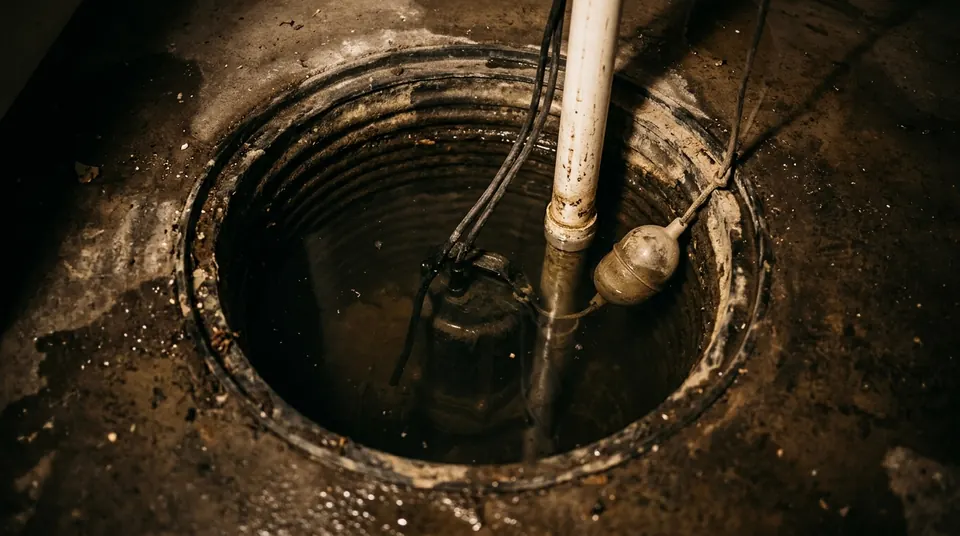
Sump pump in a basement sump pit with the float switch caught against the pit wall
Illustration: a sump pit with the float caught against the wall.

Do this before you call

In this order, while the line rings.

  1. Look at the pit from dry floor: is the pump humming, silent, or running without moving water?
  2. If the floor around the pit is wet, don't touch the plug or the pump.
  3. Move what you can off the basement floor.

Say this when the plumber answers

“Water is rising in the basement and the sump pump isn't keeping up.”
Call (313) 922-7180

Why sump pumps fail during storms

A sump pump sits idle for weeks, then has to run nonstop in the heaviest rain of the year. Southeast Michigan averages three to four inches of rain a month, and Dearborn has seen single storms of about 5.8 inches in 2014 and 7.5 inches in 2021. A float that sticks, a switch that fails or a motor that has quietly worn out shows up on that night.

Power is the other weak point. A storm strong enough to fill the pit can also take out the electricity, and a plug-in pump stops with it.

Battery backup, the city's own advice

Dearborn's flood page says battery-backup sump pumps are preferred because they keep working when the power goes out, and it advises having a contractor look at the property before one goes in. The backup pump sits beside the main pump and takes over when the main one stops or can't keep up.

Sumps and sewage ejectors are permit items on Dearborn's plumbing permit form, so a new pump installation can include a city inspection.

Groundwater or sewage: know which one you have

Water in a sump pit is groundwater from the drain tile around the foundation. Water coming up through the floor drain during a storm is usually sewer water. The city's backup sheet lists storm water seeping in through walls and floors as its own cause, usually from poor grading, gutters, footing drains or a sump pump that isn't working.

If the floor drain is the one overflowing, it is a sewer backup, and the sewer backup steps apply.

Staying safe around a flooded pit

The city's guidance is not to use electrical equipment while standing in water and to run a wet vacuum only from a GFCI outlet. Unplug what you can reach from dry floor and switch off the circuit to the flooded area at the panel if you can get there without crossing water.

  1. Why did my sump pump stop during the storm?

    The usual reasons are a lost power supply, a float stuck against the side of the pit, a failed switch or a worn-out motor. All of them show up during heavy rain, when the pump has to run nonstop. The plumber checks power, float and motor in that order.

  2. Is a battery backup sump pump worth it in Dearborn?

    The city recommends one. Dearborn's flood page says battery-backup sump pumps are preferred because they keep working during power outages, which is when heavy storms tend to hit. The backup runs only when the main pump stops or falls behind.

  3. Is water in the sump pit the same as a sewer backup?

    No. Sump pit water is groundwater from the drain tile around the foundation. Water rising through the basement floor drain during a storm is usually sewer water and needs different cleanup. Tell the plumber which opening the water is coming from.

Anywhere in Dearborn

Give the plumber the cross streets. Calls also come from Dearborn Heights, Allen Park and Melvindale: see the service areas, or read how the line works.

Water on the floor?

Shut the main. Then call the Dearborn plumbing emergency line.

Call (313) 922-7180
Call (313) 922-7180